What should I include in a quote request?
Include the product, finished dimensions, quantity, page count, paper, binding or box structure, finishes and delivery destination. Choose a recommendation when you are unsure.
 Styer print.
Include the product, finished dimensions, quantity, page count, paper, binding or box structure, finishes and delivery destination. Choose a recommendation when you are unsure.
Minimum quantities depend on the product and production method. The online calculator is an estimate; submit your target quantity for confirmation.
Count each printed side as one page, including blank pages. One sheet has two sides. List the cover separately and confirm page multiples for the chosen binding.
Upload PDF, PNG or JPEG reference files up to 20 MB. Use a production-ready PDF based on the approved template for final printing.
Extend backgrounds beyond the trim line and keep important text inside the safe area. A 3 mm bleed is a common starting point; the approved template controls final dimensions, folds and binding allowances.
Aim for 300 PPI at final image size, embed fonts and confirm the CMYK output profile. Specify spot colors separately. A screen preview cannot guarantee printed color.
Supply separate, clearly named vector masks aligned with the artwork. Confirm minimum line widths and registration tolerances before approving the finish.
Digital proofs help check content and layout. Printed proofs help evaluate color. Structural samples help check fit, folds or binding. Confirm what each proof includes and its cost before ordering.
GSM measures paper mass per square meter, not thickness. Compare surface, opacity, rigidity and intended use. Cover and inner-page stocks can be specified separately in the quote form.
Timing depends on approved files, materials, finishing, quantity and destination. Request production and transit estimates together, including any customs or delivery requirements.
No. A saved or submitted brief records your specifications. Calculator totals are illustrative estimates. Final pricing, payment terms and production approval must be agreed separately.
Sign in with ChatGPT to save drafts, edit or duplicate briefs and download your uploaded artwork. Submitted briefs remain editable and are not paid orders.
Use chat and include the project reference, a description and clear photographs of the product and outer packaging. Keep the items and packaging while the issue is reviewed.
Saved briefs can be edited or deleted in your account. For an approved production job, contact support first; completed tooling or purchased materials may affect cost and cancellation terms.
Use the sample request form and specify what you need to evaluate. Stock samples and custom printed samples have different availability, preparation and delivery costs.
The detail-page calculator updates instantly using illustrative rates. A confirmed quote needs specifications, delivery details and production review; ask support for the expected review date.
Share the campaign schedule, funding range and planned quantities. Request quotes for several scenarios and keep printing, sample and shipping budgets separate; discounts require a specific agreement.
List every component, quantities per set, packing sequence and any supplied products. Assembly, storage, inspection and handling need a separate confirmed scope and price.
Share the required arrival date before approving production. Confirm material availability, proof timing, production capacity and transport; extra costs and feasibility depend on the actual job.
Ask for the profile matched to the selected press and stock. Do not apply a supplier-specific CMYK profile automatically; inspect rich blacks, spot colors and overprints in the exported PDF.
Set a custom size, show bleed and export the available print-PDF settings. Inspect the result for fonts, bleed and resolution; use a suitable vector or layout application when technical layers are needed.
Place the template at 100% scale on a locked guide layer. Build artwork separately, extend backgrounds to bleed and hide guides before exporting. Confirm spine and structural allowances before final production.
Describe the exact changes and supply editable source files, licensed fonts and linked images where appropriate. Confirm the design-support scope and review a revised proof before production.
The site upload accepts PDF, PNG and JPEG up to 20 MB. For larger production files, discuss a transfer method in chat and keep revision names consistent across all files.
Not necessarily. Different equipment, inks and stock can shift color. Agree the controlling proof and viewing conditions; request a press sample when special substrates or inks are critical.
No. A swatch helps assess stock texture, shade, weight and stiffness. Your artwork needs a PDF, color proof or custom printed sample, depending on what you want to approve.
Production follows agreement on specifications, final pricing, payment requirements and an approved proof revision. Saving or submitting a brief on this site does not start manufacturing.
Contact support immediately with the new revision and requested changes. Confirm whether work has begun and any reproofing, tooling or material impact before replacing the approved version.
Agree inspection scope and references in advance: stock, color, dimensions, binding, finishes and packing. Ask what photographs, measurements or physical samples can be provided for the actual job.
State the required stages and intended use before production. Availability, permissions and any additional filming work need confirmation; do not assume every process can be documented.
Keep the approved proof and file revision, document the affected quantity and provide clear photographs. The cause and remedy are reviewed against the agreed specification and contract.
No. The displayed estimate excludes freight and tax. Provide country, full address, postal code and delivery requirements to request a separate landed-cost discussion.
Specify carton limits, protective wrapping, pallet requirements and receiving restrictions. Confirm moisture protection and stacking for the chosen route; packing depends on product weight and handling.
Compare express, air and sea options by chargeable weight, volume and required arrival date. Include customs, final delivery and receiving conditions when evaluating the full route.
The dispatch location and export port must be confirmed for the actual production arrangement. Do not infer the shipping origin from this website or from another supplier's quotation.
Provide a physical delivery address where possible. Carrier acceptance depends on the service and destination; confirm restrictions before paying for shipping or approving the dispatch details.
Provide quantities, labels, addresses and deadlines per destination. Split packing, storage and individual transport charges require a confirmed plan before production and dispatch.
Share the receiving appointment, pallet and carton rules, barcode labels and account references. Check the current warehouse requirements directly and approve the packing plan before shipment.
Ask before dispatch and provide the replacement instructions in writing. Repacking, new labels, booking changes or customs documentation may affect cost and delivery timing.
Separate production commitments from transit estimates. Customs, port conditions and carrier handling may change arrival dates; any guarantee or remedy must be expressly agreed for your order.
Deposit, balance timing, currency and bank charges belong in the confirmed quote or invoice. The website currently saves briefs and sample requests; it does not process payments.
Confirm approved methods, beneficiary details and invoice currency with the actual contract. The calculator displays USD estimates; it does not establish a payment account or exchange rate.
The agreed delivery term and destination determine responsibility. Ask for an itemized quote identifying freight, customs clearance, duties and local taxes; tax treatment needs destination-specific confirmation.
Bank and intermediary processing times vary. Keep the payment reference and verify receipt with the agreed beneficiary; a transfer screenshot alone does not prove cleared funds.
Review the contract, work completed, purchased materials and payment status. Request a written cost reconciliation before cancellation; no universal refund percentage applies to every custom project.
Keep the project and tracking references and confirm the receiving address. Contact support with the last tracking event and delivery deadline so the appropriate carrier enquiry can be arranged.
Photograph products, inner protection, outer cartons and shipping labels. Record damaged quantities, preserve packaging and report promptly; insurance and remedies depend on the agreed shipment terms.
Agree acceptance criteria, tolerances and the reporting period in the contract. On receipt, inspect against the approved specification and record issues; the site does not publish an unconditional reprint guarantee.
Sign in and submit the sample form. Your request and delivery details are saved in your member workspace; availability, charges and dispatch need a separate arrangement in chat.
Specify the intended market, product use and required standard. Ask which supplier records or third-party tests apply to the actual materials; availability, fees and lead time require confirmation.
Request relevant supplier information, current audit documents and traceability for the production arrangement. A website statement alone does not verify working conditions or supply-chain compliance.
State recycled-content and documentation requirements and evaluate the whole construction, including inks, coatings and adhesives. Confirm substantiated claims for the chosen stock before labeling the product.
Books that tell your story. Paper goods people keep. Packaging that brings your brand to life.
Explore our productsLet's talk about your project →
From the everyday essentials to the something special.
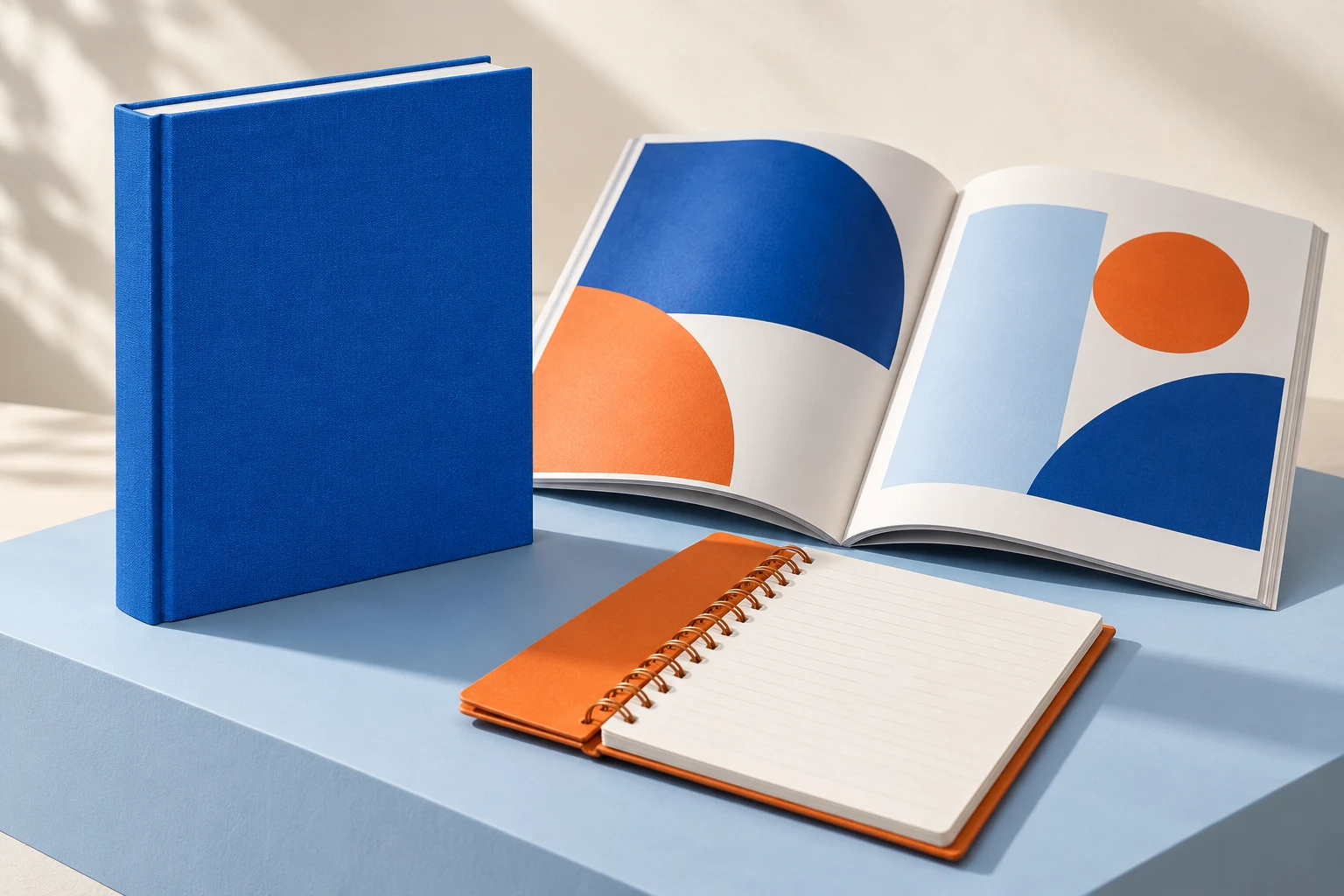
Art books, magazines, catalogs and planners. Build a publication around your content, from the feel of the cover to the way each spread opens.
Explore books & publicationsDiscover notebooks & planners →A closer look at the paper goods that carry your brand.

Make introductions, invitations and thank-you moments feel considered with custom cards and stationery.
Explore cards & invitations →
Connect your packaging, paper bags and printed inserts into one cohesive brand experience.
Explore custom packaging →Choose the paper and finishing direction that brings your idea into focus.
Natural character, tactile surfaces and an inviting paper feel. Discuss stock, weight and sample needs in your brief.
Case binding, perfect binding, saddle stitching or Wire-O. Match the construction to your format and content.
Foil, embossing, spot UV and lamination. Final suitability depends on material and artwork review.
Planning a collection, a launch or a coordinated brand kit? Bring your books, marketing materials and packaging into a single project brief.
Plan your print projectStart with what you know. Refine the rest through specification review.
Choose your product, size and quantity. Describe your artwork needs.
Review paper, binding, finishing and delivery destination.
Confirm artwork and the appropriate sample before production.
Agree on pricing, production timing and shipping after specifications are confirmed.
Useful starting points for your next print project.
Confirm final dimensions, bleed, safe margins, color profile and PDF export settings with your production team.
Consider paper weight, surface, writing needs and image reproduction. Discuss physical samples when texture matters.
Page count, paper thickness and intended use determine suitable binding. Share them in your brief for review.
Let's put your ideas on paper.
Start your project brief